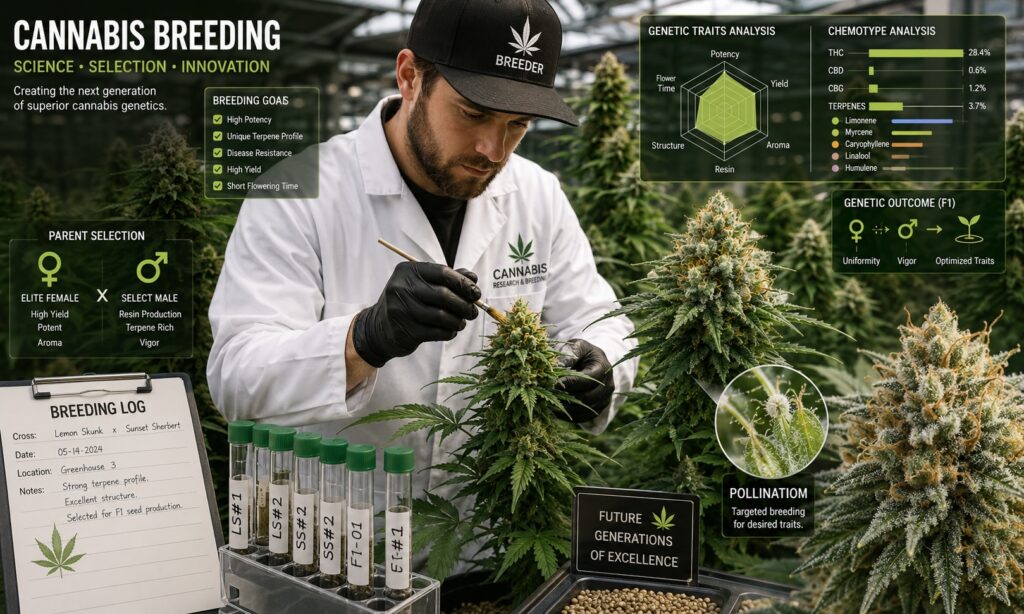
Creating a new cannabis strain is a process that combines science, patience, observation, and creativity. As a breeder, I can say that developing a stable cultivar takes far more than simply crossing two plants together. Every successful strain is the result of careful planning, multiple generations of selection, and a deep understanding of genetics. The goal is not only to create something new but also to develop a cultivar that performs consistently and offers desirable characteristics for growers.
Modern cannabis breeding has evolved significantly over the years. Today’s breeders have access to more information, better cultivation techniques, and a broader range of genetics than ever before. Yet the fundamental principles remain the same: identify valuable traits, combine them intelligently, and stabilize the resulting offspring through repeated selection.
Selecting Parent Plants
The first step in creating a new cannabis strain is selecting the parent plants. This stage is critical because the quality of the final cultivar depends heavily on the genetics used at the beginning of the project. Breeders evaluate plants based on structure, vigor, growth patterns, stability, aroma, resin production, flowering characteristics, and overall performance.
As a breeder, I spend considerable time observing potential parent plants before making any crosses. A plant may appear impressive during one stage of growth but reveal weaknesses later in its lifecycle. Thorough evaluation helps ensure that only the strongest candidates contribute to future generations.
Parent selection is often one of the most important decisions in the entire breeding process.
Making the Initial Cross
Once suitable parent plants have been identified, the breeder creates the first cross. This involves combining genetic material from two selected plants to produce a new generation of seeds. These offspring inherit traits from both parents, often resulting in a wide range of variation.
The first generation can be exciting because it reveals how different genetic combinations interact. Some offspring may display characteristics similar to one parent, while others express entirely new combinations of traits.
As a breeder, I view this stage as the beginning of a long journey rather than the final result. The initial cross provides raw material that must be refined through subsequent generations.
Selection and Stabilization
After the first generation is grown, breeders begin the process of selection. Individuals that display desirable characteristics are chosen and used in future breeding work, while less suitable plants are removed from the program.
This process is repeated over multiple generations. Stability becomes increasingly important because growers expect cultivars to perform consistently. A strain that produces highly unpredictable results may be interesting from a breeding perspective but less useful for cultivation.
Growers interested in exploring established cannabis genetics can learn more through Ministry of Cannabis. Understanding how cultivars are developed helps cultivators appreciate the work required to achieve consistency and reliability.
As a breeder, I believe stabilization is where much of the real work takes place. Creating a cross is relatively simple; refining it into a dependable cultivar requires dedication and patience.
Testing Across Different Environments
A promising strain must perform well under different cultivation conditions. For this reason, breeders often evaluate genetics in multiple environments before considering a project complete.
Environmental factors influence plant development, and testing helps identify cultivars that remain reliable across varying conditions. Consistency is one of the most valuable qualities a breeder can achieve.
As a breeder, I find environmental testing essential because it reveals strengths and weaknesses that may not appear in a single cultivation setup. The more information gathered during testing, the better the final selection decisions become.
Reliable genetics are built through extensive observation and evaluation.
The Future of Cannabis Breeding
Modern breeding continues evolving through advances in plant science, cultivation technology, and genetic analysis. Breeders today can make more informed decisions than previous generations while still relying on traditional observation and selection techniques.
The future will likely bring new opportunities for precision breeding, improved stability, and greater genetic understanding. However, the core principles of breeding remain unchanged: select carefully, observe closely, and preserve valuable diversity.
As a breeder, I believe the most successful projects combine innovation with respect for genetic heritage. Future cultivars will continue building upon the work of the breeders who came before.
Final Thoughts
Creating a new cannabis strain involves far more than making a simple cross. It requires careful parent selection, multiple generations of refinement, extensive testing, and a commitment to stability. Every successful cultivar reflects years of observation and decision-making.
Readers interested in learning more about cannabis varieties and genetics can explore additional information through https://www.newsweed.fr/categ/apprendre/varietes-cannabis/.
As a breeder, I see every new strain as both a scientific project and a creative achievement. The combination of genetics, patience, and careful selection continues driving the evolution of cannabis cultivation.